Guide
Probiotics Guide: Strains, CFU, Clostridium butyricum, Akkermansia and Safety
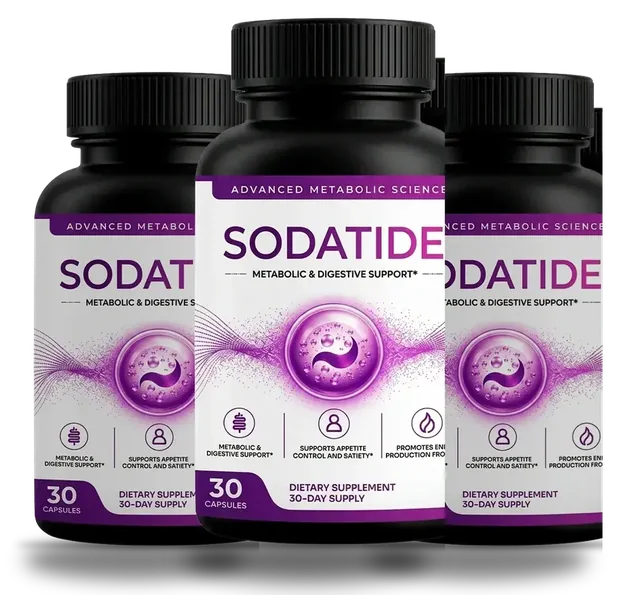
A probiotic is a live microorganism intended to have a health benefit, and its effect depends on the exact strain. Check the label for genus, species, strain and a CFU count at the end of shelf life. SodaTide's blend names three bacteria, including Clostridium butyricum and Akkermansia muciniphila, at 36 mg with no CFU count.
Written by the SodaTide label deskUpdated
The basics01
What is a probiotic, and how is it different from a prebiotic?
A probiotic is a live microorganism that, given in adequate amounts, is intended to give a health benefit. A prebiotic is a food component, mostly fiber, that microorganisms use (NIH ODS, Probiotics (health professional)).
The common types are Lactobacillus and Bifidobacterium, and a yeast, Saccharomyces boulardii, is also used (NCCIH, Probiotics: Usefulness and Safety). Mayo Clinic says the research has shown promise but has not yet proved that probiotics and prebiotics improve health for all people, or their safety for all (Mayo Clinic, Probiotics and prebiotics). Supplements need no FDA approval before sale.
The key point is that effects are strain-specific. Different probiotics may have different effects, so one strain's result does not carry over to another.
Reading labels02
How do you read a probiotic label for strain and CFU?
Look for genus, species and strain, a CFU count that holds until the end of shelf life, a serving that matches a studied dose, storage steps and contact details.
A strain is named by genus, species, subspecies if any, and a strain designation. US rules require only the total weight of the microorganisms, which can include dead cells, so a weight does not show how many are alive (NIH ODS, Probiotics (health professional)). A scientific association lists the minimum viable count of each strain at the end of shelf life as part of a good label (ISAPP, Decoding a Probiotic Product Label).
Higher CFU is not necessarily more effective. In two surveys cited by that association, only 35% of supplements could be tied to evidence by strain and dose.
3 of 9 items a probiotic label usually carries are printed in full on this label (ISAPP, Decoding a Probiotic Product Label)
- Genus and speciesPrinted
Printed: Bifidobacterium infantis, Clostridium butyricum, Akkermansia muciniphila.
- Strain designationNot printed
Not printed. Research on a probiotic is strain-specific, so a species name alone does not tell you which studies apply.
- Amount in CFUNot printed
Not printed. The label gives 36 mg for the whole blend, which is a weight, not a count of live bacteria.
- Amount at the end of shelf lifeNot printed
Not printed, because no CFU count is printed at all.
- Per-strain amountsNot printed
Not printed. The three strains share one 36 mg line.
- StoragePartly
Printed: 'Refrigerate for optimal quality.' and 'Keep away from heat, light, and humidity'. No temperature or time is given.
- Suggested usePrinted
Printed: one capsule daily with an 8 oz. glass of water.
- Contact informationPrinted
Printed: Instituto Experience, Lakeland FL 33804, +15074488190, [email protected].
- Best-before or lotNot printed
Not on the label image we have. The seller gave lot ST-26/SO-7402; ask the order desk to match it to your bottle.
The checklist follows public guidance on reading probiotic labels, not a law. A missing item does not mean the bacteria are absent or unsafe; it means a buyer cannot check the amount or the strain.
The names03
Is Clostridium butyricum a probiotic?
It is sold in some products as one, but none of the sources we read covers it. The NIH's common probiotic types are Lactobacillus, Bifidobacterium and a yeast (NCCIH, Probiotics: Usefulness and Safety).
Because effects are strain-specific, a species name alone does not tell you a product's effect. We found no source on Clostridium butyricum as a supplement, so we cannot confirm a benefit or a risk. Any probiotic is a live microbe, and the safety limits below apply to it.
SodaTide's label lists it inside a 36 mg blend, with Bifidobacterium infantis and Akkermansia muciniphila. The probiotic blend page reads that line.
Akkermansia04
What is Akkermansia, and can you buy it without a membership?
Akkermansia muciniphila is a gut bacterium that some supplements now list. We found no source on it as a supplement, so we cannot say what a capsule does.
The sales page says it is "linked in studies to a healthy metabolism" (SodaTide sales page (mysodatide.com)). We could not check that line. Mayo Clinic says human data on gut bacteria and weight are murky (Mayo Clinic News Network, Probiotics, gut bacteria and weight).
On membership: the kits on this site are priced per bottle, at $79, $69 or $49 each by kit size. Before you pay, confirm on the live checkout that no membership or recurring charge applies. The FTC warns that "free" trials can lead to recurring charges (FTC, The Truth Behind Weight Loss Ads). Our guarantee page explains the 60-day policy.
Weight05
Do probiotics help with weight loss?
The evidence is very limited. Pooled trials show a small change that the authors call fragile.
A review of 21 trials found probiotic arms about 0.65 kg lighter than placebo, with a median follow-up of 12 weeks and substantial heterogeneity (Kunnackal John 2018, Gut microbiome diet and weight meta-analysis). The NIH calls the effects small and of questionable clinical significance (NIH ODS, Probiotics (health professional)). Cleveland Clinic says there is little evidence that probiotics cause weight loss (Cleveland Clinic, Probiotics and weight loss).
| Source | What it found |
|---|---|
| Review of 21 trials | Probiotic arms about 0.65 kg lighter, 12 weeks median |
| NIH fact sheet | Effects small, of questionable clinical significance |
| Cleveland Clinic | Little evidence that probiotics cause weight loss |
| These three bacteria in a capsule | No source found |
Whether gut bacteria cause obesity or result from it is unknown, and diet is the most important factor shaping the microbiome (Mayo Clinic News Network, Probiotics, gut bacteria and weight).
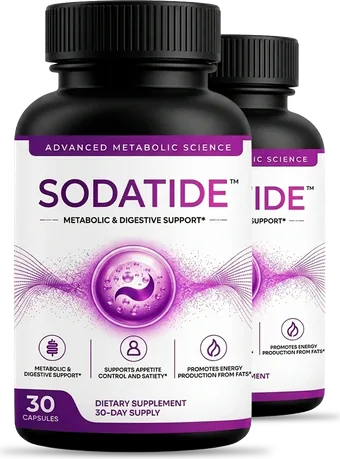
SodaTide capsules: 30 in each bottle1 capsule a day by the label · 2, 3 or 6 bottles · $79, $69 or $49 a bottle
See kitsSafety06
Who should not take probiotic supplements?
People with weak immune systems, central lines, severe illness or immune-suppressing medicine should avoid them unless a clinician says otherwise.
Harvard says exactly this, and adds that supplement makers do not always run quality control, so products can hold less than the labeled dose or different strains (Harvard Nutrition Source, Probiotics for Gut Health). The NIH reports serious infections mostly in severely ill or immunocompromised people, and an FDA warning covers premature infants (NIH ODS, Probiotics (health professional)). For most healthy adults, side effects are usually minor, such as gas.
- Severe or lasting belly pain, or a swollen, hard bellyGet urgent care. Do not take another capsule.
- Blood in the stool, black stools or repeated vomitingCall your doctor now or go to urgent care.
- Fever with diarrhea, or diarrhea that does not stopCall your doctor. Dehydration can build fast.
- Swelling of the face or throat, hives, trouble breathingSigns of a severe allergic reaction. Call 911.
- A child ate capsules or you took too manyCall Poison Help at 800-222-1222 and keep it handy; call 911 if they cannot be woken.
General safety advice for supplements: (NCCIH, Using Dietary Supplements Wisely). This list is not complete, and a supplement is never a reason to wait.
Pregnant or nursing, under 18, a known condition or any medicine: ask a clinician first. Keep taking every prescribed medicine.
Storage07
Do probiotics need to be refrigerated?
Some do and some do not, so follow the label. Live probiotics can die during storage, and responsible makers list the expected count at the use-by date (Harvard Nutrition Source, Probiotics for Gut Health).
SodaTide's label says "Refrigerate for optimal quality" and to keep it away from heat, light and humidity. The seller's brief says to refrigerate after opening. Where they differ, the label wins. No source we read gives a number of hours a bottle can stay out of the fridge.
The FDA warns that weight-loss products are often found with hidden drugs (FDA, Weight Loss Product Notifications). We found no public test, FDA notice or warning letter for SodaTide, and that proves nothing.
Next08
Is a probiotic blend a reason to choose SodaTide?
Not on what is printed. The label gives names and a weight but no live count, so the blend cannot be compared with a study.
If you still want to try it, the kits are 2 bottles at $79 each, 3 at $69 each or 6 at $49 each; confirm the live price on the checkout. This site earns money when you buy through its order links.
See the SodaTide kitsFAQ09
SodaTide questions people ask
What does CFU stand for on a probiotic?
CFU means colony-forming units, a count of live organisms that can multiply. The NIH advises looking for the count at the end of shelf life, not at manufacture.
Can you take probiotics every day?
Many healthy adults do, and side effects are usually minor. Safety has not been studied much, so Mayo Clinic advises checking with a health care professional first, especially if you take medicine.
Are multi-strain probiotics better?
Not necessarily. Harvard says multi-strain products are not necessarily better than single-strain ones. What counts is whether each strain was studied for the benefit claimed.
Is Akkermansia sold as a subscription?
Some probiotic sellers bill by subscription. Our kit prices are per bottle, so confirm on the live checkout that no membership or recurring charge applies before you pay, and keep your order email.
What are the signs of a bad reaction to a probiotic?
Call a clinician for fever, severe belly pain, blood in the stool or repeated vomiting. A rash or swelling of the face or throat needs 911. Stop the product and report it to the FDA.
Who wrote this10
Written and reviewed by
Pages built from the label image, the seller brief and linked FDA, NIH, CDC, FTC and peer-reviewed sources.
Last updated . Read our editorial standards and how we check reviews. This website is the information site of a USA Authorized SodaTide Retailer. It is not the manufacturer or the brand owner. We earn money when you buy through our order links.
Keep reading
More about SodaTide
USA Authorized SodaTide Retailer
Ready to look at SodaTide?
Run the medicine check first and ask your doctor or pharmacist if anything on it applies. Then pick a kit size: the live checkout shows the final price, the shipping and the guarantee exactly as printed.
- Secure checkout on the sales site
- 60-day money-back (confirm live policy)
- Ships from the U.S.