Guide
Chicory Root: What Inulin Is, How Much Per Day Is Known and What to Ask First
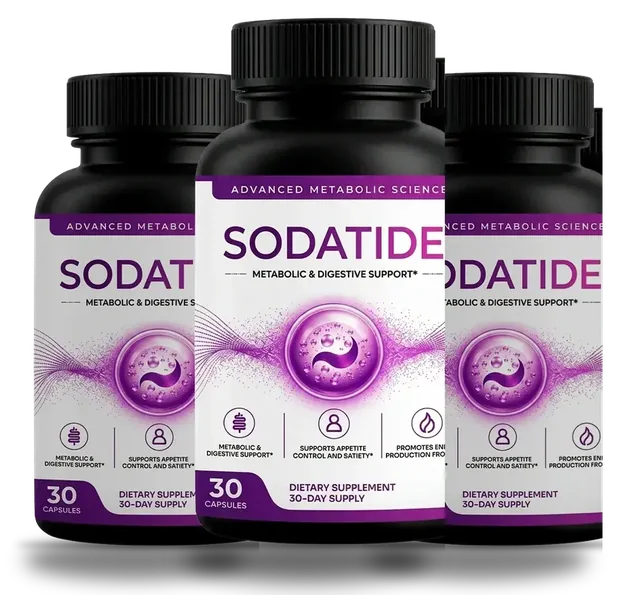
Chicory root is a plant root whose main fibre is inulin, and most inulin supplements are made from it. No official daily amount of chicory root or inulin has been set. The only dose in the sources we read is 20 to 40 g a day in one constipation study. SodaTide prints 211 mg (0.211 g) per capsule.
Written by the SodaTide label deskUpdated
The basics01
What is chicory root, and what is inulin?
Chicory root is the root of a blue-flowered herb, and its main fibre is inulin. Inulin is a plant carbohydrate that your body does not digest, so gut bacteria use it as food (Cleveland Clinic, Inulin).
So "inulin and chicory root" are not two rival products. Chicory root is the plant part, and inulin is the fibre taken from it. Cleveland Clinic notes that the inulin used for most supplements tends to come from chicory root, and that supplements come as capsules, gummies, tablets and powder. Inulin also occurs in onions, asparagus and Jerusalem artichokes (Harvard Nutrition Source, Fiber), and it is a soluble fibre that forms a gel and slows stomach emptying.
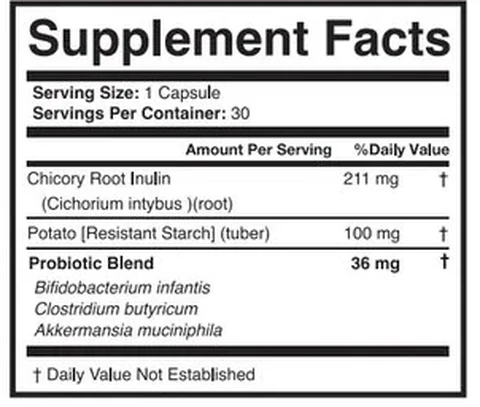
Chicory root has also been roasted for a coffee-like drink, which is why you may meet the word on a coffee shelf. A capsule such as SodaTide lists "Chicory Root Inulin (Cichorium intybus)(root)" on its Supplement Facts panel.

| Form | What it is | What to remember |
|---|---|---|
| Chicory root (food or coffee substitute) | The roasted or raw root | The amount of inulin in a cup is not given in the sources we read |
| Inulin powder or capsule | Fibre taken from the root, mostly chicory | The label should print the milligrams or grams |
| Onions, asparagus, artichokes | Foods that contain inulin | Food portions bring other fibres too |
The amount02
How much chicory root per day is known to be right?
No one knows an ideal amount, because none has been set. WebMD says optimal doses of inulin have not been set for any condition (WebMD, Inulin: Uses and Risks).
The only dose its page cites is 20 to 40 grams a day, in one constipation study in older adults. That is a study amount for one purpose. It is not a target, and we do not offer a recommended amount for readers. Fibre in general has adult daily amounts from the National Academy of Medicine: 25 g for women up to 50, 38 g for men up to 50 (Mayo Clinic, Dietary fiber). These cover all fibre from food, not inulin alone.
Now the small arithmetic. SodaTide prints 211 mg of chicory root inulin per capsule, which is 0.211 g. The study dose of 20 g is about 95 times larger. That gap does not make the capsule safe or unsafe. It means a trial amount cannot be copied onto it, and the label gives no reason for why 211 mg was chosen.
Gut effects03
Does chicory root cause gas and bloating?
It can. Cleveland Clinic lists constipation, cramping, diarrhea, gas and bloating as possible effects of too much inulin (Cleveland Clinic, Inulin), and WebMD adds loose stools and more frequent bowel movements.
The reason is simple. Gut bacteria ferment inulin, and NIDDK explains that bacteria break down carbohydrates that reach the large intestine and make gas in the process (NIDDK, Gas in the Digestive Tract: eating, diet, nutrition). Cleveland Clinic's note on chicory coffee puts it in plain words: the inulin that revs up digestion may lead to gas and belly bloating (Cleveland Clinic, Coffee Alternatives (chicory)). People with irritable bowel syndrome may be more sensitive to inulin-type fibres (Harvard Nutrition Source, Fiber).
Mayo Clinic advises adding fibre over a few weeks and drinking plenty of water, because too much too fast can cause gas, bloating and cramping (Mayo Clinic, Dietary fiber). No source we read gives a starting amount for inulin.
- Change one fibre at a time, not two in the same week.
- Keep a short food and symptom diary to spot triggers.
Allergy04
Is chicory root a problem if you have a ragweed allergy?
Possibly, and the evidence is thin. A dietitian quoted by Cleveland Clinic says you may be more prone to issues with chicory if ragweed or pollen bothers you (Cleveland Clinic, Coffee Alternatives (chicory)).
The American College of Allergy, Asthma and Immunology explains pollen food allergy syndrome: proteins in some pollens resemble proteins in raw fruits and vegetables, so the immune system can react to both (ACAAI, Pollen Food Allergy Syndrome). Its food list for ragweed names banana, cucumber, melons, sunflower seeds and zucchini. It does not name chicory.
We found no government source that ties chicory to ragweed allergy, and no source that says inulin from chicory always carries an allergen. So treat it as a reason to ask, not as a finding. The usual symptom is an itchy or swollen mouth. Anything beyond the mouth, such as hives, throat tightness or trouble breathing, needs urgent care, and an allergist can test you.
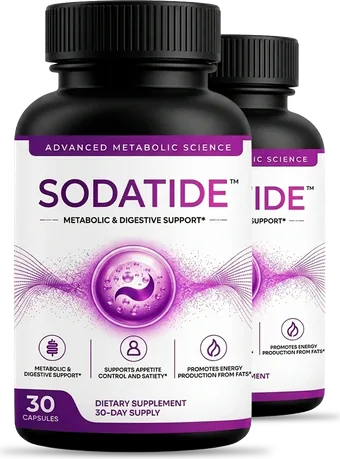
SodaTide capsules: 30 in each bottle1 capsule a day by the label · 2, 3 or 6 bottles · $79, $69 or $49 a bottle
See kitsThe research05
Does chicory root inulin help with weight?
The evidence is very limited. In one pooled review of 21 trials, the five prebiotic arms lost about 0.90 kg (2 pounds) more than placebo, and the authors call that result fragile (Kunnackal John 2018, Gut microbiome diet and weight meta-analysis).
The same review found no significant change in fat mass for prebiotics, the BMI change was not significant, and the median follow-up was 12 weeks. The review names no product and does not single out chicory. NIH's Office of Dietary Supplements says little is known about whether weight loss supplements work, and the text we read has no inulin section (NIH ODS, Dietary Supplements for Weight Loss (health professional)). Cleveland Clinic says inulin slows stomach emptying so you feel full longer (Cleveland Clinic, Inulin), but gives no weight data.
- Chicory Root InulinLimited
Limited: small trials at gram doses; weight effects small or mixed. Small trials of inulin-type fibre on appetite, weight and gut bacteria; most used several grams a day. (Cleveland Clinic, Inulin) (WebMD, Inulin: Uses and Risks) (Harvard Nutrition Source, Fiber) (Kunnackal John 2018, Gut microbiome diet and weight meta-analysis)
- Potato Resistant StarchLimited
Limited: small trials at gram doses; weight evidence limited. Trials of resistant starch (often raw potato starch in gram doses) on blood sugar, fullness and gut bacteria. (Cleveland Clinic, Resistant starch) (Harvard Health, Resistant starch) (Baptista 2024, Resistant starch narrative review)
- Probiotic BlendVery limited
Very limited for these three names and for weight. Probiotic effects depend on the exact strain; studies of other strains looked at weight and gut symptoms. (NCCIH, Probiotics: Usefulness and Safety) (NIH ODS, Probiotics (health professional)) (ISAPP, Decoding a Probiotic Product Label) (Kunnackal John 2018, Gut microbiome diet and weight meta-analysis) (Cleveland Clinic, Probiotics and weight loss)
Bubbles show how much human research the linked sources describe for the uses the front of the bottle implies: appetite, metabolism and digestion. From 0 (none found) to 5 (strong). None of it tested SodaTide, and research on an ingredient is not proof that a product works at the printed amount.
Read the chicory root inulin page for how the label line fits these findings.
Safety first06
Who should ask a doctor before taking chicory root or inulin?
Anyone pregnant or nursing, anyone with a medical condition and anyone who takes medicine should ask first. Many supplements have not been tested in pregnant women, nursing mothers or children (NCCIH, Using Dietary Supplements Wisely).
Diabetes medicines come first on the list. Insulin, sulfonylureas and meglitinides can cause low blood sugar, and skipped meals are one cause (NIDDK, Low Blood Glucose (Hypoglycemia)). We found no source that says how inulin interacts with them, so show the bottle to your pharmacist. Keep taking every prescribed medicine exactly as directed. Tell every provider about every supplement before surgery (ASA, Herbal and Dietary Supplements and Anesthesia).
One more caution for products sold for weight: FDA warns that many weight-loss products have been found with hidden drug ingredients (FDA, Weight Loss Product Notifications). We found no public test, FDA notice or warning letter for SodaTide, and absence from a list proves nothing.
The label07
What does the SodaTide label print about chicory root?
It prints one line: Chicory Root Inulin (Cichorium intybus)(root), 211 mg per capsule, with no Daily Value. The label tells you to take one capsule daily with an 8 oz. glass of water.
The label does not say which part of the root is used, how the inulin was made or how long it keeps. No study of SodaTide was found, so what this guide says about chicory describes the ingredient in general, not the capsule. Its front lines, such as "Metabolic & Digestive Support*", are the seller's wording, and the asterisk points to the FDA statement that the claims have not been evaluated.
If you want the whole label, see the supplement facts page. For habits that have the evidence, see healthy weight habits.
FAQ08
SodaTide questions people ask
Is chicory root the same thing as inulin?
No. Chicory root is the plant part, and inulin is the fibre inside it. Most supplement inulin comes from chicory root, but inulin is also found in onions, asparagus and Jerusalem artichokes, so the two words are linked, not identical.
Is chicory root a prebiotic?
Chicory root is described that way because its inulin is a fermentable fibre that feeds gut bacteria. Harvard's Nutrition Source lists inulin-type fibres among them. Harvard's probiotics guidance adds that quality evidence for prebiotic supplements is scarce.
Can you take chicory root every day?
No source we read sets a safe daily amount, so we cannot say yes or no. Ask your doctor or pharmacist, start low if they agree, and stop if you get persistent cramping, diarrhea or any allergic sign.
Is chicory coffee the same as an inulin capsule?
Not exactly. Cleveland Clinic says chicory coffee contains inulin, but the sources we read give no amount per cup. A capsule prints its milligrams, so the two cannot be compared without that missing number.
Can chicory root irritate irritable bowel syndrome?
It might. Harvard notes that people with irritable bowel syndrome may be sensitive to inulin-type fibres, and Cleveland Clinic says inulin can aggravate some conditions. Talk to your provider before starting a supplement.
Who wrote this09
Written and reviewed by
Pages built from the label image, the seller brief and linked FDA, NIH, CDC, FTC and peer-reviewed sources.
Last updated . Read our editorial standards and how we check reviews. This website is the information site of a USA Authorized SodaTide Retailer. It is not the manufacturer or the brand owner. We earn money when you buy through our order links.
Keep reading
More about SodaTide
USA Authorized SodaTide Retailer
Ready to look at SodaTide?
Run the medicine check first and ask your doctor or pharmacist if anything on it applies. Then pick a kit size: the live checkout shows the final price, the shipping and the guarantee exactly as printed.
- Secure checkout on the sales site
- 60-day money-back (confirm live policy)
- Ships from the U.S.